
There is a quiet intelligence within the body that most people learn to ignore – but the body holds the truth long before the mind is ready to accept it.
We are taught to think, analyze, and explain our way through life. The mind becomes the authority. It gathers information, weighs options, and searches for certainty. Yet the more we rely on it, the further we often move from clarity.
The mind seeks control, the body signals truth
The mind is designed to protect. It anticipates outcomes, replays scenarios, and tries to avoid discomfort. In doing so, it often creates distance from what is actually happening.
The body, however, does not strategize. It responds.
A tightening in the chest.
A sense of heaviness.
A sudden lightness or expansion.
These are not random sensations. They are intuitive body signals—direct expressions of alignment or resistance.
When we override them with logic, we enter confusion. When we listen, we return to clarity.
More: Does body language tell the truth?
Body intuition is immediate
Unlike thought, which moves in loops, body intuition is immediate. It does not argue. It does not justify. It simply responds.
This is why so many people feel “off” in situations they cannot logically explain. The mind searches for reasons, while the body has already registered the truth.
Learning to trust this process is not about rejecting the mind, but about restoring balance in the mind–body connection.
Simple ways to test what your body already knows
When awareness deepens, the body can be used as a clear guide. Two simple practices can help reconnect with this inner knowing.

1. The forward–backward body test
Stand still and gently orient your body toward the north. Before you begin, take a moment to drink a little water—hydration supports clearer body responses and helps the nervous system stay balanced. Bring to mind a decision, a person, or a situation you are unsure about.
Say “yes” and notice what your body does. Then say “no” and observe again.
Often, the body will naturally lean slightly forward toward alignment, and backward away from what feels wrong. The movement is subtle—but real. Most people will notice the body leaning forward for “yes” and backward for “no,” but for some, it may be the opposite, which is why it’s helpful to first test your natural responses with simple yes and no statements.
If you are new to this, it can help to ask simple, grounded questions first, such as:
- “Is this decision — (state the decision) — right for me at this moment?”
- “Does this situation — (state the situation) —support my well-being?”
- “Is this person — (state the person) — aligned with my energy?”
The key is not to overthink the question, but to allow the body to respond before the mind begins to interpret.
This is not something to force. It is something to notice.
More: Micro meditation: The 3-minute practice that instantly resets your mind
2. The thumb resistance test
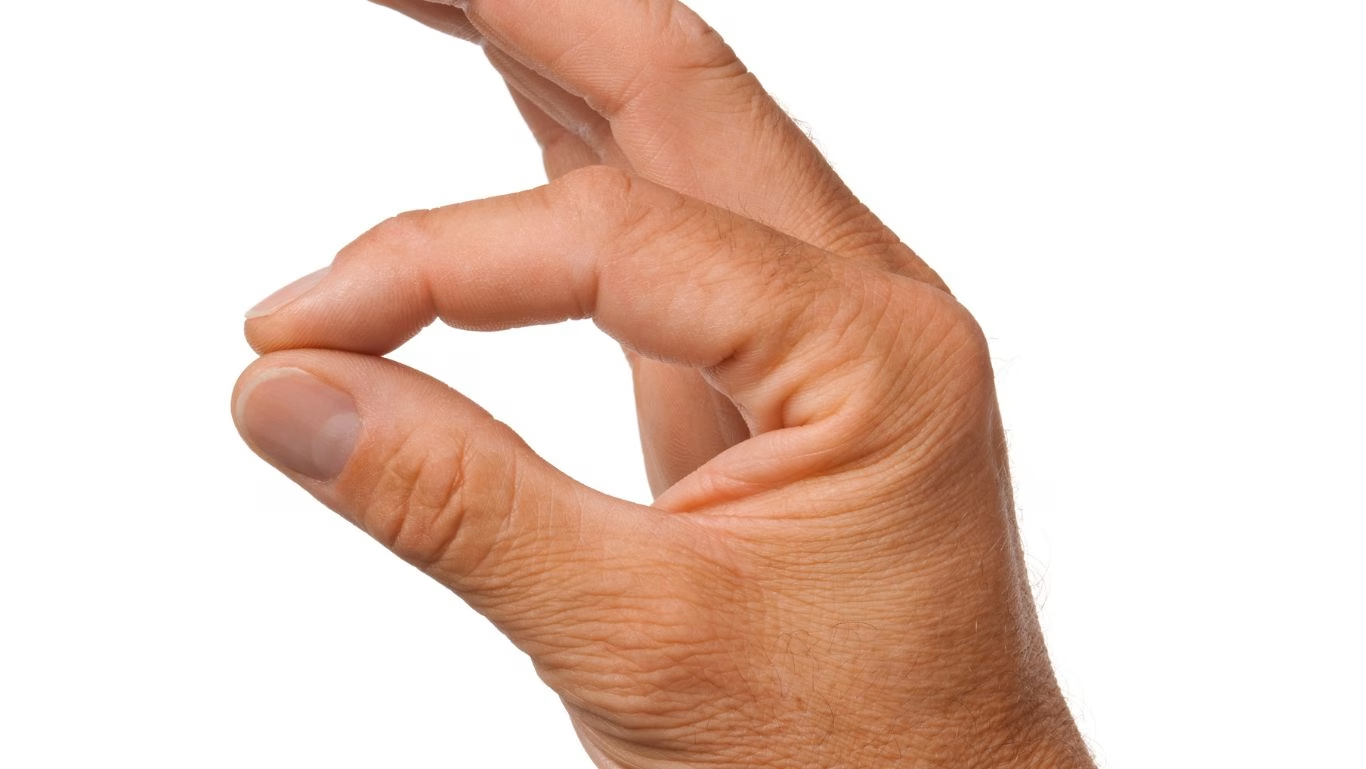
Gently connect your thumb and index finger to form a small circle, creating a light but stable connection. Now bring a statement or question into your awareness—something you want clarity on. With your other hand, use your index finger to try to separate the circle you’ve created.
When the body resonates with truth, the connection tends to remain steady and firm. When something feels off or misaligned, the connection may weaken, making it easier to break.
You can experiment with simple statements such as:
- “This choice is right for me.”
- “I feel safe moving in this direction.”
- “This opportunity supports my growth.”
It may seem simple, even surprising—but this is how listening to your body begins. Not through complexity, but through attention.
More: The key to healthy relationships: Importance of expressing needs and feelings
Why we learn to distrust our bodies

Most people were not taught to trust their internal signals.
They were taught to:
- be rational
- be agreeable
- explain their decisions
Over time, this creates a disconnect. The body continues to respond, but its signals are overridden by thought patterns, expectations, and fear of being wrong.
This is where overthinking begins—not as intelligence, but as distance from inner truth.
More: Somatic exercises for anxiety: 7 Body-based practices that calm the nervous system
Returning to somatic awareness

Rebuilding trust with the body is not complicated. It is subtle.
It begins with noticing:
- what feels expansive
- what feels heavy
- what creates calm
- what creates tension
This is somatic awareness—the ability to read internal signals without immediately interpreting or judging them.
As this awareness grows, decisions become clearer. Not easier, but more honest.
The body does not need to be convinced; the body holds the truth
The mind often looks for certainty before acting. It wants guarantees, explanations, and reassurance. The body does not. It already knows – the body holds the truth.
When you begin to trust that knowing, something shifts. Decisions no longer come from pressure or fear, but from alignment. Life becomes less about controlling outcomes and more about responding to what is true.
And in that space, clarity returns—quietly, but consistently.
More: Mooji: How to love without attachment